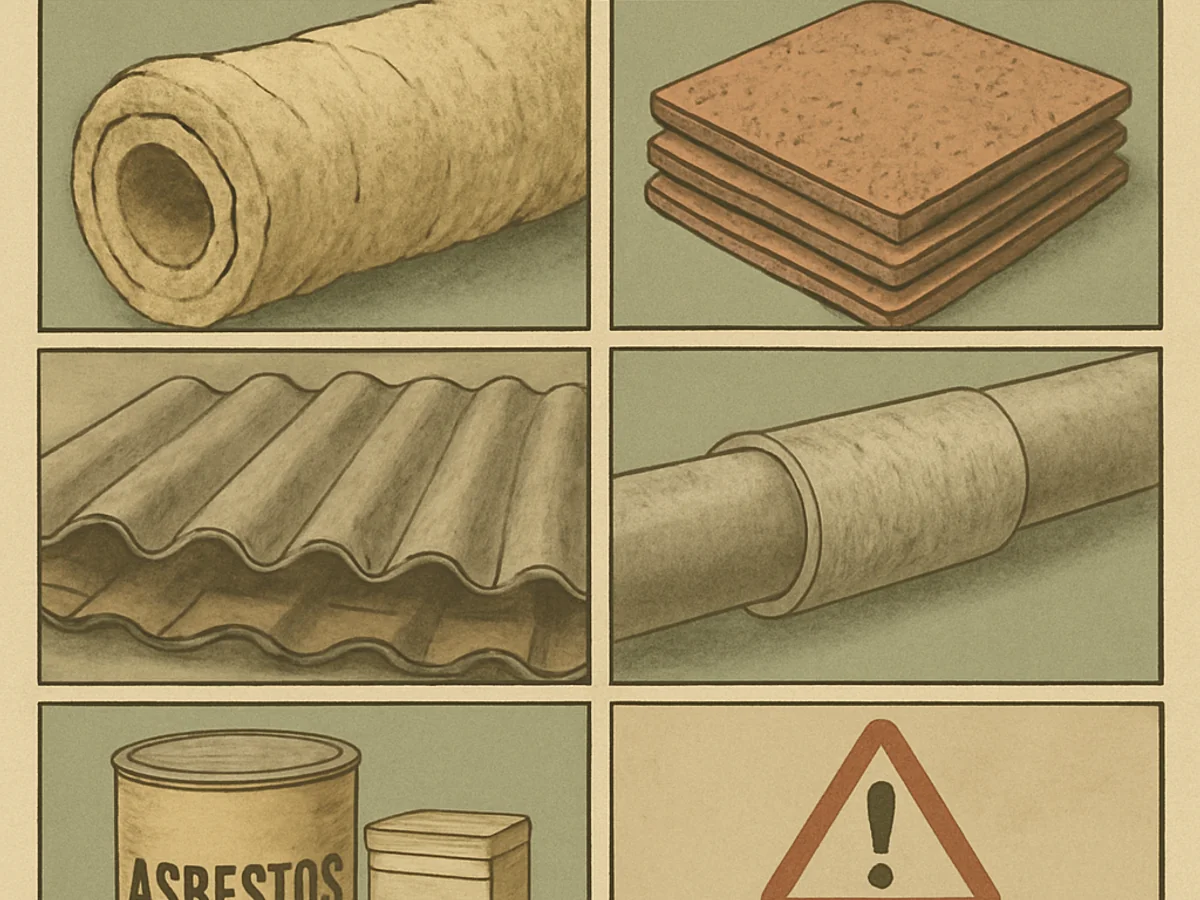
Building Materials & Insulation
Building materials represent the largest category of asbestos-containing products. Buildings constructed or renovated between 1930 and 1980 are most likely to contain asbestos in multiple locations.
Insulation Products
- Pipe and duct insulation: Wrapped around hot water pipes, steam pipes, and HVAC ducts
- Boiler insulation: Wrapped around boilers for heat retention
- Attic and wall insulation: Loose-fill or batted asbestos fiber (especially vermiculite products contaminated with asbestos)
- Fireproofing sprays: Applied to structural steel beams and walls
- Asbestos paper and blanket: Used as fire barriers and thermal insulation
- Rope and cord: Seal tape around pipe connections
Flooring & Wall Materials
- Vinyl floor tiles: Many 9x9 inch asphalt tiles manufactured before 1980 contained asbestos
- Linoleum: Backing and underlying materials often contained asbestos
- Adhesives: Mastic used to install floor tiles and wall coverings
- Asbestos cement board: Used for interior wall surfaces and exterior siding
- Joint compound (drywall mud): Used to finish drywall seams
- Spackling paste: For repairing drywall holes
Roofing & Weatherproofing
- Roofing shingles: Many asphalt shingles contained asbestos fibers
- Roof tar and coatings: Protective coatings for flat roofs
- Roofing felt: Base layer beneath shingles
- Asbestos cement pipes: Used for drainage and water lines
- Gutter and downspout materials: Some contained asbestos
Plumbing & HVAC Components
- Asbestos cement pipes: Sewer lines and water distribution pipes
- Pipe coupling and fittings: Connection components
- Gasket materials: For pipe connections and valve seals
- HVAC insulation: Around heating and cooling ducts
- Duct tape and sealants: Some contained asbestos
Automotive Parts & Brake Products
The automotive industry extensively used asbestos for its heat-resistant properties in brakes, clutches, gaskets, and other components.
Brake System Components
- Brake pads: Asbestos fibers provided friction and heat resistance
- Brake linings: Bonded asbestos friction material
- Brake shoes: For drum brakes, contained asbestos
- Brake dust: Generated during brake wear, contains asbestos fibers
Transmission & Clutch
- Clutch plates: Friction surfaces contained asbestos
- Clutch facings: Bonded asbestos material
- Transmission bands: Heat-resistant asbestos friction material
- Transmission gaskets: Sealing components
Engine & Cooling System
- Gaskets and seals: Around engine head, intake manifold, and valve covers
- Engine insulation: Heat shields and acoustic dampening
- Hoses and clamps: Some contained asbestos
- Head gasket materials: For engine sealing
Exposure Risk in Mechanics
Mechanics and technicians face significant asbestos exposure when working with older vehicles. Brake work, clutch service, gasket replacement, and general repair work can release asbestos fibers. This occupational exposure is a major source of mesothelioma in the automotive industry.
Industrial Products & Equipment
Industrial workers faced extensive asbestos exposure through manufacturing equipment, protective gear, and facility materials.
Power Generation & Utilities
- Boiler insulation: At power plants and industrial facilities
- Pipe insulation: Covering hot water and steam lines
- Fireproofing materials: Applied to structural components
- Gaskets and seals: For equipment connections
- Thermal protective equipment: Aprons, gloves, clothing
Shipbuilding & Naval Equipment
- Boiler insulation: Extensive use on naval vessels
- Pipe insulation: Throughout ship systems
- Fireproofing: Applied to compartments and corridors
- Gaskets and packings: Equipment seals
- Protective clothing: For shipyard workers
Oil Refining & Chemical Plants
- Equipment insulation: Around hot vessels and pipes
- Fireproofing materials: For fire safety
- Gaskets and seals: For process equipment
- Protective gear: Clothing and equipment
Textile & Manufacturing
- Equipment gaskets: In textile machinery
- Insulation: Around steam and hot water lines
- Protective equipment: Heat-resistant clothing
- Friction materials: In machinery bearings and drives
Consumer & Household Products
Many consumer products contained asbestos, exposing families to risk during normal product use and eventual disposal.
Appliances & Electronics
- Hair dryers: Heating element insulation and barrel liners (1950s-1970s)
- Toasters: Insulation around heating elements
- Ovens and stoves: Insulation materials
- Irons: Heat-resistant insulation
- Space heaters: Protective insulation
- Electrical equipment: Wire insulation and component covers
Arts, Crafts & Hobby Materials
- Crayons: Some brands contained asbestos as filler
- Pottery clay: Some products contaminated with asbestos
- Paints: Some formulations included asbestos fillers
- Spackle and putty: For craft repairs
- Roofing cement: For hobby/craft use
Personal Care & Beauty Products
- Talcum powder: Some formulations contaminated with asbestos (especially Talc))
- Body powder: Similar contamination as talc products
- Makeup products: Some contained asbestos as a colorant or anti-caking agent
- Deodorants: Particularly talc-based products
Garden & Yard Products
- Asbestos-cement siding: For garden sheds and outbuildings
- Roof shingles: For structures
- Soil conditioners: Vermiculite products contaminated with asbestos
- Fertilizer additives: Some contained asbestos
Fireplace & Heating Accessories
- Fireplace insulation: Behind fireplace liners
- Stove gaskets: Wood stove and furnace seals
- Artificial logs and embers: Some contained asbestos fibers
- Chimney insulation: In chimney liners
How to Identify Asbestos Products
Visual Characteristics (NOT Reliable for Confirmation)
While asbestos products often have certain appearances, you cannot visually confirm asbestos without laboratory testing. However, these characteristics suggest possible asbestos:
- Fluffy, fibrous insulation (white, blue, or brown appearance)
- Pipe wrap that is friable (crumbly or easily damaged)
- Spray-applied fireproofing that looks loose or damaged
- Vinyl floor tiles manufactured before 1980
- Old joint compound or spackling paste
- Corrugated roofing or asbestos cement materials
Age & Location Clues
- Homes built 1930-1980: High probability of asbestos materials
- Pipe insulation: In basements, around boilers, hot water heaters
- Floor tiles: In bathrooms and kitchens (especially 9x9 tiles)
- Ceiling tiles: Especially textured or "popcorn" ceilings
- Roofing: Shingles, tar, and felt layers
- Drywall joint compound: If home renovated before 1980
Professional Testing Methods
Only laboratory analysis can confirm asbestos. Professional asbestos inspectors use these methods:
- Polarized light microscopy (PLM): Identifies asbestos fiber type under polarized light
- Transmission electron microscopy (TEM): Provides definitive asbestos identification and counts fibers
- X-ray diffraction: Identifies specific asbestos mineral types
- Gravimetric analysis: Quantifies asbestos content percentage
When to Call a Professional
- Before any renovation or demolition of older buildings
- If insulation appears damaged or crumbly
- When purchasing older homes (pre-inspection recommended)
- If you find materials you suspect contain asbestos
- Before major HVAC, plumbing, or electrical work
What to Do If You Find Asbestos
Do Not Disturb the Material
The greatest risk of asbestos exposure occurs when materials are disturbed, damaged, or removed improperly. Undisturbed asbestos in good condition poses minimal health risk.
- Do not touch, poke, or attempt to remove suspected asbestos
- Do not vacuum or sweep near suspected asbestos (releases fibers)
- Do not allow children or pets to play near suspected materials
- Prevent anyone from drilling, cutting, or damaging suspected asbestos
Encapsulation vs. Removal
If asbestos is confirmed, your options depend on condition and location:
- Encapsulation: Sealing the material with a protective coating. Suitable for undamaged asbestos in good condition. Cheaper and less disruptive than removal.
- Removal: Complete removal and proper disposal. Necessary if material is damaged, deteriorating, or will be disturbed during renovation.
Hiring an Asbestos Abatement Contractor
Always use licensed, certified professionals:
- Verify state licensing and EPA certification
- Check references and previous projects
- Ensure they carry asbestos liability insurance
- Get written quotes from multiple contractors
- Verify they follow EPA and state regulations for safe removal and disposal
Safe Removal Process
- Containment: Area sealed with plastic sheeting to prevent fiber spread
- HEPA filtration: Air is filtered through HEPA filters to remove fibers
- Protective equipment: Workers wear respirators, suits, and protective gear
- Wetting: Materials kept wet during removal to minimize fiber release
- Packaging: Materials sealed in heavy-gauge plastic for disposal
- Disposal: Transported to licensed asbestos disposal facility
Legal Right to Know
Tenants and workers have legal rights regarding asbestos:
- Property owners/landlords must disclose known asbestos
- Employers must inform workers of asbestos presence
- Building renovations must include asbestos surveys
- You can request asbestos inspection results
Products That May Still Contain Asbestos Today
Regulatory Status
While the EPA banned most asbestos products in 1973, some loopholes and exceptions remain. Approximately 6% of commercial asbestos uses were never prohibited, and some products can still legally contain asbestos.
Products That May Still Contain Asbestos
- Chrysotile asbestos: Still imported and used in limited applications
- Insulation products: Some formulations may still contain asbestos
- Brake pads and clutch materials: Some formulations contain asbestos
- Gasket and packing materials: Industrial applications
- Roofing products: Some newer products may contain asbestos
- Talc and talc-containing products: Risk of asbestos contamination
- Imported products: Products made outside the US may contain asbestos not banned internationally
How to Avoid Current Asbestos Exposure
- Check product labels and material safety data sheets (MSDS)
- Contact manufacturers to verify asbestos content
- Avoid old or outdated products
- Be cautious with imported products
- Use certified modern alternatives for insulation and friction materials
- Avoid talc powders that could be contaminated
Know Your Legal Rights
If you or a family member has been exposed to asbestos through products or occupational exposure and developed mesothelioma or asbestos-related disease, you may have legal recourse against responsible manufacturers and companies.
Learn About Your Legal Options →Frequently Asked Questions About Asbestos Products
How much asbestos exposure causes mesothelioma?
There is no safe level of asbestos exposure. Even minimal exposure can potentially cause mesothelioma. Mesothelioma can develop from brief, low-level exposure, though typically mesothelioma develops after years of occupational or environmental exposure. Individual susceptibility varies, and some people exposed never develop disease.
Is asbestos dangerous if it's not disturbed?
Undisturbed asbestos in good condition poses minimal health risk because fibers are not released into the air. However, if asbestos becomes damaged, deteriorated, or disturbed through renovation or demolition, fibers can be released and inhaled. This is why proper identification and handling are critical.
How long does asbestos remain dangerous?
Asbestos fibers are extremely durable and do not break down over time. They remain dangerous indefinitely—decades or even centuries after exposure. Once inhaled into lung tissue, asbestos fibers can remain there for life, slowly causing inflammation and cellular damage that may lead to mesothelioma.
Can I remove asbestos from my home myself?
No. DIY asbestos removal is extremely dangerous and illegal in most jurisdictions. You need licensed professionals with proper equipment, containment systems, and disposal procedures. Improper removal dramatically increases your and your family's asbestos exposure risk.
Should I have my older home tested for asbestos?
If your home was built before 1980 and you plan to renovate, it's wise to have a professional asbestos inspection. If you're not planning renovations and materials appear undamaged, testing may be less critical. However, inspection provides peace of mind and documents asbestos presence for future owners/sellers.
Sources & References
Medically Reviewed
Dr. Sarah Chen, MD, MPH
Board-Certified Oncologist — Thoracic Oncology Specialist
Last reviewed: March 2026 | Our Editorial Process
Medical References
- Landrigan PJ, et al. (2004). The Hazards of Asbestos. Environ Health Perspect, 112(10):1065-1069. PMID: 15238274
- American Cancer Society. (2026). Asbestos Exposure and Cancer Risk. Cancer.org.
- IARC Working Group. (2012). Asbestos (Chrysotile, Amosite, Crocidolite, Tremolite, Actinolite, and Anthophyllite). IARC Monographs on the Evaluation of Carcinogenic Risks to Humans, 100C:219-309.
- Järvholm B, et al. (2003). Mesothelioma, Lung Cancer, and Asbestos Exposure. Scand J Work Environ Health, 29(4):310-316. PMID: 12934728
- U.S. Environmental Protection Agency. (2025). Asbestos: Laws and Regulations. EPA.gov