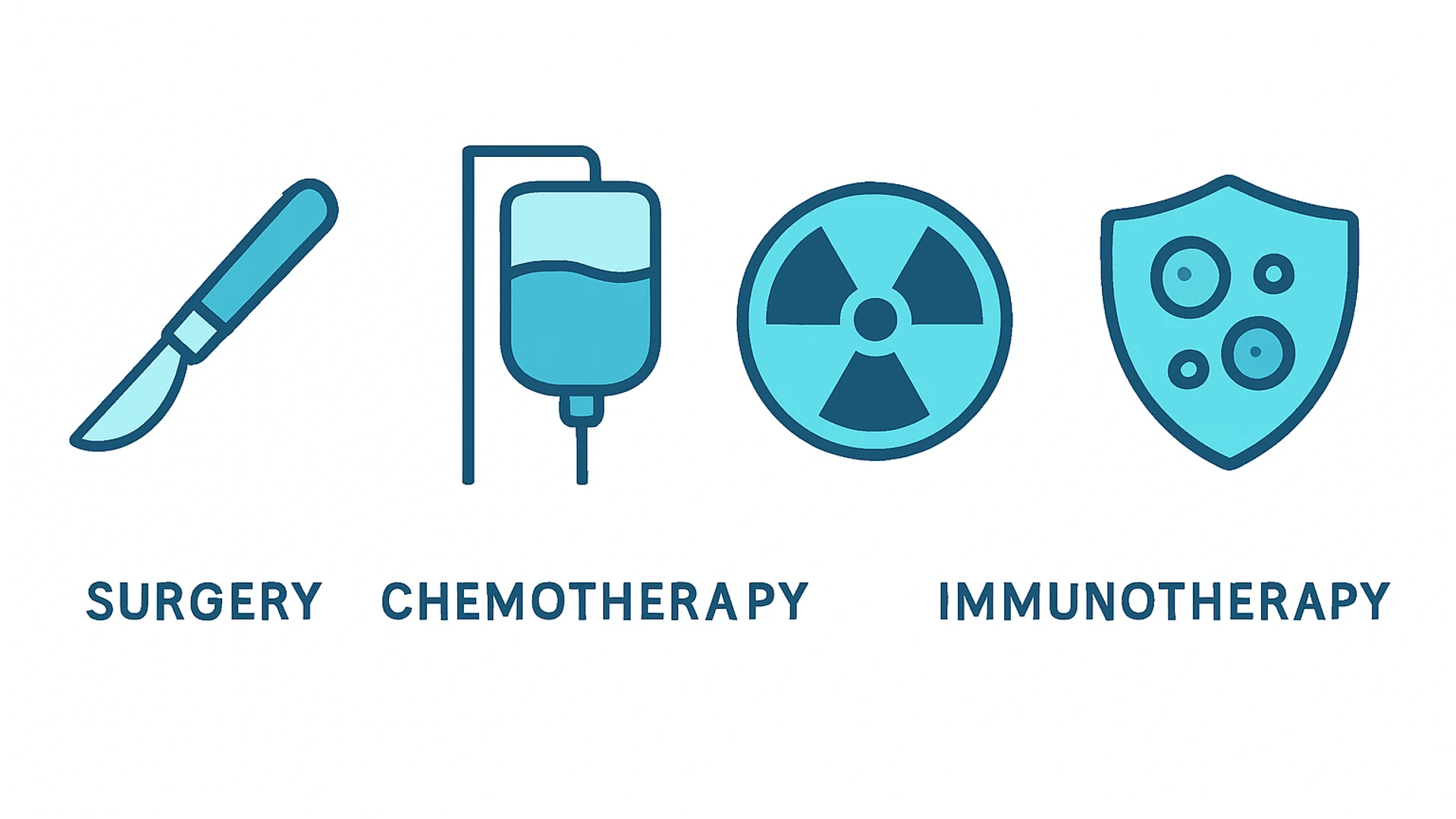
Treatment for mesothelioma has evolved significantly in recent years, offering patients more options than ever before. From traditional approaches like surgery and chemotherapy to cutting-edge immunotherapy and targeted treatments, understanding your options is essential for making informed decisions about your care.
Multiple treatment options are available depending on cancer stage and patient health
Multimodal Treatment Approach
Most mesothelioma specialists recommend a multimodal approach—combining multiple treatment types for the best outcomes. Multimodal therapy can significantly extend survival and improve quality of life:
Common Treatment Combinations
Triplet Therapy: Surgery + Chemotherapy + Radiation
EPP: Removes the affected lung, pleura, diaphragm, and pericardium. P/D: Lung-sparing surgery removing only the pleura and visible tumors. Compare EPP vs P/D →
Research continues to advance mesothelioma treatment, including promising approaches like epigenetic therapy that may improve outcomes for certain patients:
Cell type (epithelioid vs. sarcomatoid vs. biphasic)
Overall health and age
Patient preferences and goals
Getting a Second Opinion
Given the complexity of mesothelioma treatment, seeking a second opinion from a mesothelioma specialist is highly recommended. Specialists at major cancer centers see more cases and often have access to the latest treatments and clinical trials. Many patients find it worthwhile to travel to see top specialists for consultation and treatment.
Medical Disclaimer: The information provided is for educational purposes only and is not intended as a substitute for professional medical advice, diagnosis, or treatment. Always seek the advice of your physician or other qualified health provider with any questions you may have regarding a medical condition.
The treatment plan for mesothelioma is highly individualized, and several factors influence which options are available. The type and location of mesothelioma is a primary consideration: pleural mesothelioma (in the lung lining) and peritoneal mesothelioma (in the abdominal lining) are treated with different surgical approaches and may respond differently to systemic therapies. The stage at diagnosis determines whether curative-intent surgery is feasible or whether treatment should focus on controlling the disease and managing symptoms.
Cell type is another critical factor. Epithelioid mesothelioma, the most common histological subtype, generally responds better to all forms of treatment than sarcomatoid or biphasic subtypes. The patient's age, overall health, lung function, and personal preferences also play important roles. A fit 60-year-old with early-stage epithelioid mesothelioma may be an excellent candidate for aggressive multimodal therapy, while a patient with significant comorbidities or advanced disease may benefit more from less invasive approaches focused on maintaining quality of life.
Multimodal Treatment: The Standard of Care
For eligible patients, the most effective mesothelioma treatment typically involves a combination of two or more modalities—surgery, chemotherapy, radiation therapy, and increasingly, immunotherapy. This multimodal approach aims to address the cancer through different mechanisms: surgery removes visible tumor tissue, chemotherapy targets microscopic cancer cells that surgery cannot reach, radiation treats localized areas at high risk for recurrence, and immunotherapy helps the patient's own immune system recognize and attack remaining cancer cells.
The sequencing of these treatments varies by center and protocol. Some treatment plans begin with neoadjuvant chemotherapy to shrink the tumor before surgery, followed by adjuvant radiation. Others follow a surgery-first approach. The SMART protocol (Surgery for Mesothelioma After Radiation Therapy) delivers accelerated hemithoracic radiation before surgical resection. Each approach has potential advantages, and your medical team will recommend the sequence they believe offers the best balance of effectiveness and tolerability for your specific situation.
Emerging and Investigational Treatments
Mesothelioma research continues to produce new treatment approaches. Immunotherapy has been a major area of progress: the combination of nivolumab and ipilimumab (CheckMate 743) received FDA approval in 2020 as a first-line treatment for unresectable pleural mesothelioma. Ongoing trials are investigating other immunotherapy combinations, including combinations of checkpoint inhibitors with chemotherapy and with targeted agents.
Other areas of active research include tumor treating fields (TTFields), a device-based therapy that uses alternating electric fields to disrupt cancer cell division; CAR T-cell therapy, which engineers a patient's own immune cells to target mesothelioma-specific proteins; gene therapy approaches that aim to correct or exploit the genetic mutations driving mesothelioma growth; and photodynamic therapy, which uses light-activated drugs to destroy cancer cells during surgery. Many of these approaches are available through clinical trials at specialized cancer centers.
Choosing the Right Approach
Making treatment decisions for mesothelioma can feel overwhelming, but you do not have to decide alone. Your oncologist and treatment team will present the options most appropriate for your situation, explain the potential benefits and risks of each approach, and help you weigh these against your personal priorities and values. Seeking a second opinion at a center with mesothelioma expertise is strongly encouraged, particularly before beginning treatment, and can provide additional perspectives and potentially access to clinical trials not available at all institutions.
Supportive and Palliative Care
Palliative care—specialized medical care focused on relieving symptoms and improving quality of life—is an essential component of mesothelioma treatment regardless of the stage of disease. Palliative care is not the same as hospice care and can be provided alongside curative treatments. A palliative care team may include physicians, nurses, social workers, chaplains, and other specialists who work together to manage pain, breathing difficulties, fatigue, nausea, and the psychological impact of cancer.
For pleural mesothelioma, procedures such as pleurodesis (sealing the pleural space to prevent fluid from reaccumulating) and indwelling pleural catheters (small tubes that allow regular fluid drainage at home) can significantly improve breathing and comfort. For peritoneal mesothelioma, paracentesis (draining fluid from the abdomen) and managing bowel symptoms are important aspects of supportive care. Nutrition counseling, physical therapy, and mental health support are also integral parts of a comprehensive treatment plan.
Treatment Centers and Access
The quality and availability of mesothelioma treatment varies across the country. Major cancer centers with dedicated mesothelioma programs—including Brigham and Women's Hospital, Memorial Sloan Kettering, MD Anderson, and the University of Chicago—offer access to the full range of treatment options, including specialized surgical techniques and clinical trials. However, patients in rural areas or those unable to travel may face challenges accessing these resources.
Telemedicine has expanded access to mesothelioma expertise, allowing patients to consult with specialists remotely for second opinions and treatment planning. Some clinical trials include provisions for satellite sites or allow patients to receive certain components of treatment closer to home while traveling to the trial site for key procedures and assessments. Patient assistance programs, including those offered by pharmaceutical companies and nonprofit organizations, can help cover treatment costs, travel expenses, and lodging during treatment.