What is Multimodal Therapy for Mesothelioma?
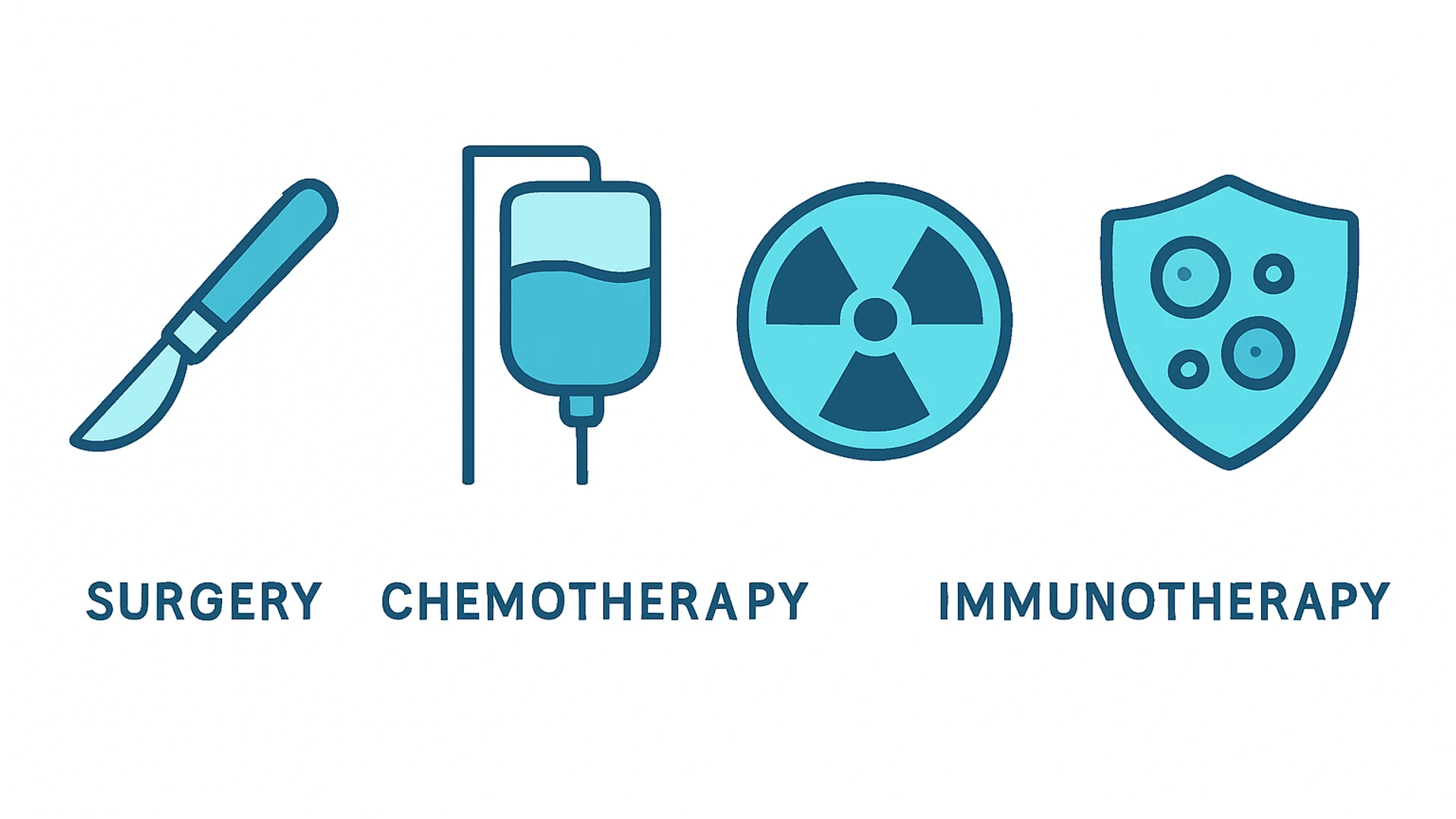
Multimodal therapy uses two or more treatment modalities—typically surgery, chemotherapy, and radiation—administered sequentially or concurrently to maximize tumor elimination. The philosophy behind multimodal approach is that each treatment method targets cancer through different mechanisms, addressing weaknesses that single treatments might miss.
Components of Multimodal Treatment
- Surgery: Removes visible tumors and affected tissue. Surgical debulking improves the effectiveness of subsequent chemotherapy and radiation by reducing tumor burden.
- Chemotherapy: Kills cancer cells throughout the body using drugs like pemetrexed and cisplatin. Chemotherapy can be delivered before, after, or during surgery and radiation.
- Radiation Therapy: Delivers targeted radiation to the pleural cavity or abdomen to destroy remaining cancer cells after surgery and chemotherapy.
The evidence is clear: multimodal approaches produce superior outcomes compared to single-modality treatment. Trimodal therapy (all three modalities) generally provides the best results for appropriately selected patients, with median overall survival reaching 31-49 months in specialized centers, compared to 12-18 months with surgery alone.
Rationale for Combined Treatment Approaches
Mesothelioma is an aggressive cancer requiring aggressive treatment. Single modalities have limitations that multimodal therapy overcomes:
Why Surgery Alone is Insufficient
Even aggressive surgical resection cannot remove all cancer cells. Micrometastases and peritoneal seeding often escape surgical removal. Studies show surgery alone rarely achieves disease-free survival, with most patients developing recurrence within 1-2 years.
Why Chemotherapy Alone Fails
Chemotherapy struggles to penetrate large tumor masses effectively. Additionally, systemic chemotherapy carries significant toxicity, and many patients cannot tolerate doses intense enough to achieve complete tumor eradication. Chemotherapy works best when combined with debulking surgery that reduces tumor burden.
Why Radiation Alone is Limited
Mesothelioma tumors are often extensive and ill-defined, making it difficult to target radiation precisely. Radiation toxicity to surrounding lung and heart tissue limits achievable doses. Radiation works best as a consolidative therapy after surgery and chemotherapy have reduced tumor burden.
Synergistic Benefits of Combined Therapy
- Improved local control: Surgery removes bulk disease, radiation targets microscopic disease
- Better systemic control: Chemotherapy targets distant metastases that surgery cannot reach
- Reduced likelihood of recurrence: Multiple mechanisms attack cancer from different angles
- Potential cure possibility: Trimodal therapy offers the best chance for disease control and prolonged survival
Common Treatment Combinations in Multimodal Therapy
Surgery + Chemotherapy (Bimodal)
This combination remains common for patients who cannot tolerate radiation due to medical comorbidities or previous chest radiation.
- Neoadjuvant chemotherapy: Chemotherapy before surgery (typically 2-4 cycles). Advantages: shrinks tumors before resection, treats systemic disease early, allows assessment of treatment response. Disadvantages: delays surgery, may compromise surgical tolerance.
- Adjuvant chemotherapy: Chemotherapy after surgery (typically 4 cycles). Advantages: surgery achieves maximal debulking first, chemotherapy treats remaining disease. Disadvantages: patients recovering from surgery tolerate chemotherapy less well.
Surgery + Radiation (Bimodal)
This combination was historically common but has been supplemented by trimodal approaches.
- Postoperative radiation: Radiation delivered 4-6 weeks after surgery to the entire pleural cavity or abdomen
- Hemithoracic radiation: High-dose radiation to the chest cavity after extrapleural pneumonectomy
Trimodal Therapy (Surgery + Chemotherapy + Radiation)
This represents the most comprehensive approach, now considered standard at leading mesothelioma centers for eligible patients.
- Induction chemotherapy: 2-4 cycles of pemetrexed/cisplatin before surgery
- Definitive surgery: Extrapleural pneumonectomy or pleurectomy/decortication 3-4 weeks after completing chemotherapy
- Adjuvant radiation: Intensity-modulated radiation therapy (IMRT) or proton therapy delivered 4-6 weeks after surgery to maximize dose while minimizing toxicity
Current evidence: Trimodal therapy produces the best outcomes. A landmark study from Brigham and Women's Hospital reported trimodal therapy patients achieved median overall survival of 49.4 months, compared to 27.7 months with surgery and chemotherapy alone.
Treatment Sequencing & Timing
Neoadjuvant (Induction) Chemotherapy First
Approach: Chemotherapy delivered before surgery
- Advantages: Assesses treatment response before surgery, may downstage disease, allows early systemic treatment, easier to complete full chemotherapy doses before surgery
- Disadvantages: Delays surgery, may compromise surgical candidacy if disease progresses, patients may deteriorate during chemotherapy
- Typical regimen: 2-4 cycles of pemetrexed 500 mg/m² + cisplatin 75 mg/m² every 21 days
Surgery with Adjuvant Chemotherapy
Approach: Surgery performed first, followed by chemotherapy and radiation
- Advantages: Immediately removes tumor bulk, patients see surgical results first, chemotherapy and radiation consolidate surgical gains
- Disadvantages: Chemotherapy tolerance reduced during recovery from major surgery, disease may progress during recovery
- Timeline: Surgery at week 0, adjuvant chemotherapy starts 4-6 weeks post-op after adequate recovery
Concurrent Chemoradiation
Approach: Chemotherapy and radiation delivered simultaneously
- Advantages: May provide superior local control through synergistic effects
- Disadvantages: Significantly increased toxicity, not routinely recommended for mesothelioma due to excessive morbidity
Optimal Timing Between Modalities
- Chemotherapy to surgery: 3-4 weeks after completing chemotherapy (allows recovery and reassessment)
- Surgery to radiation: 4-6 weeks after surgery (allows wound healing and recovery)
- Surgery to adjuvant chemotherapy: 4-6 weeks post-op (allows adequate recovery)
Patient Selection Criteria for Multimodal Therapy
Not all mesothelioma patients are candidates for multimodal therapy. Careful patient selection is critical to balance treatment benefits against risks.
Key Selection Criteria
- Stage: Typically Stage I-II pleural mesothelioma; selected Stage III patients may be considered. Advanced stage disease generally unsuitable due to systemic burden.
- Histology: Epithelioid histology generally has better prognosis and treatment tolerance than sarcomatoid or biphasic types.
- Age: Age alone is not prohibitive. Chronological age matters less than physiologic fitness. Active 75-year-olds may be better candidates than sedentary 60-year-olds.
- Performance status: ECOG 0-1 (fully active or restricted to light activity). Patients with ECOG 2+ generally cannot tolerate intensive multimodal therapy.
- Pulmonary function: Adequate baseline lung function essential. FEV1 >40% predicted and DLCO >40% predicted typically required. Advanced emphysema or pulmonary fibrosis may preclude treatment.
- Cardiac function: Adequate left ventricular ejection fraction (LVEF >45%). Significant cardiac disease increases surgical and treatment-related mortality risk.
- Renal function: Adequate renal function for chemotherapy (creatinine clearance >60 mL/min/1.73m²). Cisplatin is nephrotoxic and requires good baseline function.
- Overall health: No significant comorbidities that would preclude aggressive treatment. Uncontrolled diabetes, active infection, or malignancy elsewhere are contraindications.
Pretreatment Evaluation
- Comprehensive history and physical examination
- Staging CT chest/abdomen/pelvis with contrast
- PET-CT to detect distant metastases
- Pulmonary function tests (spirometry and diffusion capacity)
- Cardiac evaluation (echocardiogram or stress test if indicated)
- Laboratory studies (complete blood count, comprehensive metabolic panel, coagulation studies)
- Multidisciplinary team review (surgery, oncology, pulmonology, cardiology)
Outcomes & Survival Data from Multimodal Therapy
Survival Results
Clinical data demonstrates the superiority of multimodal therapy:
- Trimodal therapy (surgery + chemotherapy + radiation): Median overall survival 31-49 months; 2-year survival 40-70%; 5-year survival 10-40%
- Surgery + chemotherapy: Median overall survival 25-35 months; 2-year survival 40-50%
- Surgery alone: Median overall survival 12-20 months; 2-year survival 20-30%
- Chemotherapy alone: Median overall survival 12-18 months; 2-year survival 10-25%
Landmark Clinical Studies
Brigham and Women's Hospital Multimodal Series: This institutional experience with 663 patients treated with multimodal therapy showed median overall survival of 49.4 months in the most recent cohort, with 35% 5-year survival in selected patients with early-stage disease.
MD Anderson Cancer Center: Reported median survival of 31 months with trimodal therapy, compared to 16 months with non-multimodal approaches.
Memorial Sloan Kettering: Demonstrated that aggressive multimodal treatment including IMRT radiation achieved improved disease-free survival and local control.
Factors Influencing Outcomes
- Completeness of resection: Macroscopic complete resection (R0) is associated with superior survival
- Tumor histology: Epithelioid patients have better outcomes than sarcomatoid; biphasic falls between
- Stage at diagnosis: Earlier-stage disease (I-II) has significantly better prognosis than Stage III-IV
- Treatment sequence: Neoadjuvant chemotherapy followed by surgery and adjuvant therapy produces excellent results
- Center experience: High-volume mesothelioma centers report superior outcomes; surgeon experience matters significantly
Managing Side Effects of Multimodal Therapy
Multimodal therapy's effectiveness comes at the cost of significant side effects. Specialized centers manage these complications through experienced supportive care teams.
Chemotherapy-Related Side Effects
- Myelosuppression: Decreased blood cell production leading to anemia, infection risk, and bleeding. Managed with growth factors (G-CSF), blood transfusions, and infection prophylaxis
- Nausea and vomiting: Managed with 5-HT3 antagonists, NK1 antagonists, and corticosteroids
- Nephrotoxicity: Cisplatin-related kidney damage. Mitigated by aggressive hydration, monitoring renal function, and dose adjustments
- Neurotoxicity: Peripheral neuropathy from platinum agents. Supportive care and potentially dose modification
- Fatigue: Persistent energy depletion. Managed with rest, gradual activity increases, and nutritional support
Surgery-Related Complications
- Air leaks from lung resection
- Infection or wound complications
- Bleeding or chest tube drainage
- Arrhythmias or cardiac complications (especially with EPP)
- Respiratory insufficiency requiring extended ventilation
Radiation-Related Side Effects
- Pneumonitis: Inflammation of lung tissue 2-6 weeks post-radiation. Managed with corticosteroids and pulmonary support
- Pericarditis: Inflammation of heart membrane. Managed with NSAIDs and corticosteroids
- Esophagitis: Inflammation of esophagus causing difficulty swallowing. Managed with antacids and dietary modification
- Skin toxicity: Erythema and desquamation at radiation portals
- Secondary malignancy: Long-term risk of radiation-induced cancer
Supportive Care Measures
- Nutritional assessment and dietitian consultation
- Pain management protocols
- Infection prevention measures
- Antifungal and antibacterial prophylaxis when appropriate
- Psychological support and counseling
- Pulmonary and cardiac monitoring
- Close communication with multidisciplinary team
Emerging Multimodal Approaches
As immunotherapy becomes increasingly important in cancer treatment, researchers are exploring addition of immunotherapy to traditional multimodal regimens.
Adding Immunotherapy to Multimodal Therapy
Checkpoint inhibitors like pembrolizumab and nivolumab are showing promise in mesothelioma. Emerging strategies combine immunotherapy with traditional multimodal therapy:
- Immunotherapy + chemotherapy: Checkpoint inhibitors combined with induction chemotherapy before surgery
- Immunotherapy after multimodal therapy: Checkpoint inhibitors as maintenance therapy following surgery, chemotherapy, and radiation
- Rationale: Chemotherapy, surgery, and radiation all activate the immune system; addition of checkpoint inhibitors may enhance these effects
Hyperthermic Intraperitoneal Chemotherapy (HIPEC)
For peritoneal mesothelioma, some centers combine cytoreductive surgery with heated intraperitoneal chemotherapy, producing improved outcomes. This represents an evolving multimodal approach specific to peritoneal disease.
Proton Therapy in Multimodal Regimens
Proton therapy may reduce radiation toxicity to surrounding tissues while delivering effective doses to mesothelioma tumors. Some centers now incorporate proton therapy into multimodal regimens as a refinement of traditional photon radiation.
Frequently Asked Questions About Multimodal Therapy
How long does the entire multimodal therapy process take?
The complete trimodal process typically spans 4-6 months. Induction chemotherapy takes 8-12 weeks (2-4 cycles), followed by surgery 3-4 weeks later, then recovery of 4-6 weeks before starting radiation. Adjuvant chemotherapy and radiation are usually completed by 6 months from treatment start.
Will I be able to work during multimodal therapy?
Most patients cannot work during active multimodal therapy. The demands of chemotherapy, surgery, and radiation, combined with recovery periods, typically prevent employment. Consider disability leave during treatment. Some patients may gradually return to work during recovery, depending on job demands and individual tolerance.
What are my chances of long-term survival with multimodal therapy?
This varies significantly based on stage, histology, and center experience. Early-stage epithelioid patients treated at high-volume centers may achieve 5-year survival rates of 20-40%. Advanced-stage or sarcomatoid patients typically have lower 5-year survival of 5-15%. Your medical team can discuss your individualized prognosis based on your specific disease characteristics.
Can older patients tolerate multimodal therapy?
Yes, chronological age is not the primary determinant. Fit, healthy 75-year-olds may be excellent candidates while sedentary 60-year-olds might not tolerate treatment. What matters is functional fitness, organ function, comorbidity burden, and overall health status. Your medical team will evaluate your individual fitness for treatment.
What should I expect if I'm not a candidate for multimodal therapy?
Alternative approaches include chemotherapy alone, sequential single-modality treatment, palliative care, or clinical trial enrollment. Your oncology team will discuss options tailored to your disease stage and health status. Chemotherapy alone still provides survival benefit and improved quality of life for many patients ineligible for multimodal therapy.
Know Your Legal Rights
If you or a loved one has been diagnosed with mesothelioma due to asbestos exposure, you may be entitled to compensation through lawsuits, settlements, or trust funds.
Explore Legal Options →Sources & References
Medically Reviewed
Dr. Sarah Chen, MD, MPH
Board-Certified Oncologist — Thoracic Oncology Specialist
Last reviewed: March 2026 | Our Editorial Process
Medical References
- Sugarbaker DJ, et al. (2018). Resection of apical segmental pneumonectomy (RASKP) for advanced mesothelioma. Ann Thorac Surg, 106(2):367-374. PMID: 29909955
- Krug LM, et al. (2009). Phase II trial of neoadjuvant pemetrexed plus cisplatin followed by extrapleural pneumonectomy in patients with malignant pleural mesothelioma. J Clin Oncol, 27(18):3007-3013. PMID: 19451429
- Weder W, et al. (2007). Neoadjuvant chemotherapy followed by extrapleural pneumonectomy in malignant pleural mesothelioma. J Clin Oncol, 25(8):1000-1008. PMID: 17350942
- Treasure T, et al. (2011). Multimodal therapy for mesothelioma: a new phase. Lancet, 378(9809):2048-2050. PMID: 22137862
- American Cancer Society. (2026). Malignant Mesothelioma Treatment. Cancer.org.