Living Well with Stage 3
A stage 3 diagnosis means the disease is advanced, but meaningful treatment and care remain available. Many patients achieve good disease control and excellent quality of life for months or years with modern chemotherapy and palliative support. Focus on what matters most to you and work with a care team that understands your goals.
What Is Stage 3 Mesothelioma?
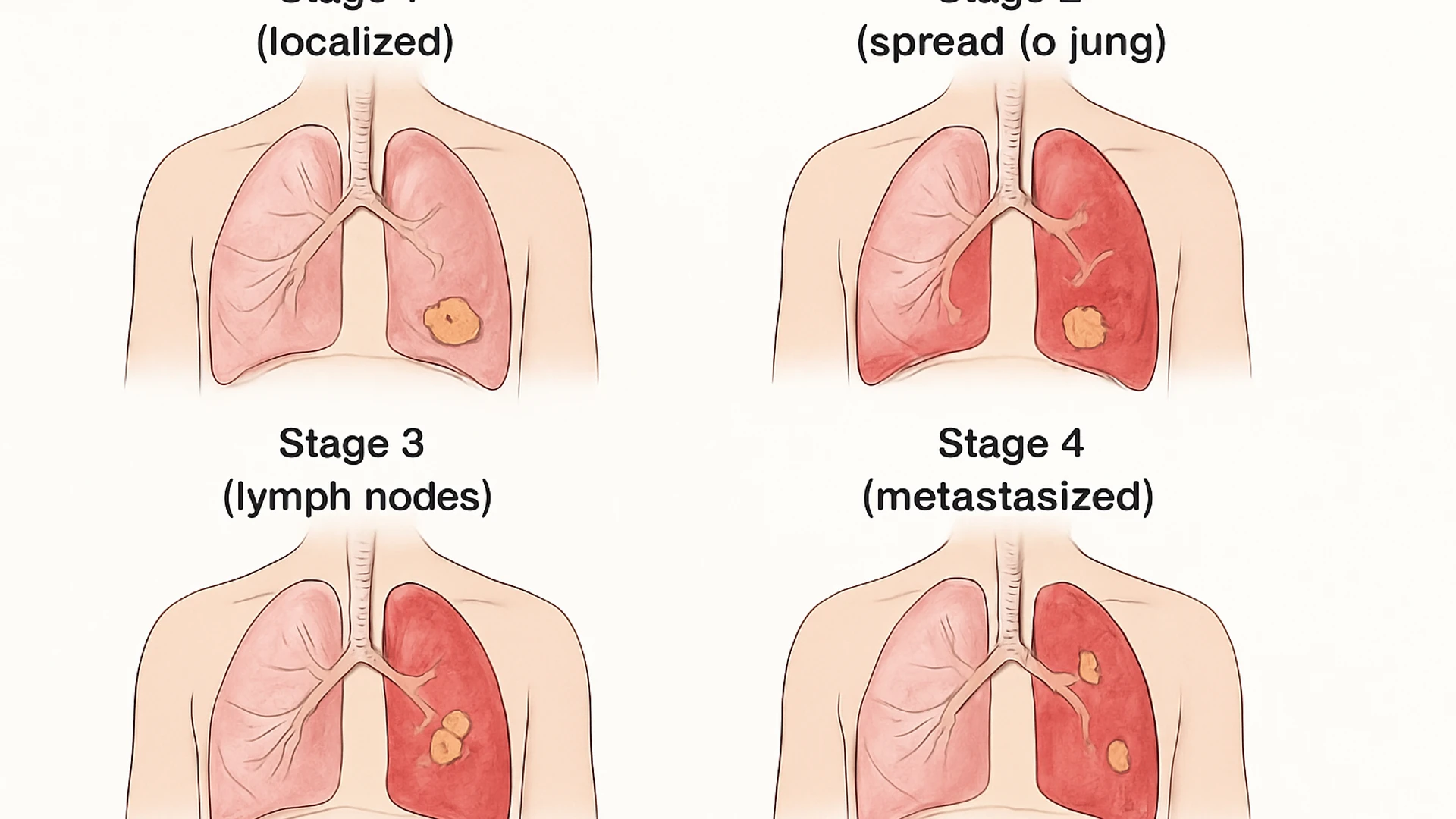
Stage 3 mesothelioma represents locally advanced disease with spread to lymph nodes on both sides of the chest (bilateral) or to tissues of the chest wall, diaphragm, and adjacent structures. Unlike stages 1-2 with unilateral disease, stage 3 involves more extensive local involvement but still lacks distant metastases.
TNM Classification for Stage 3
Stage 3 includes several substage combinations:
- Stage 3A: Tumor with unilateral involvement of mediastinal lymph nodes (N2)
- Stage 3B: Tumor with bilateral lymph node involvement (N3), or invasion of diaphragm, pericardium, or mediastinum
The defining feature is the presence of N2 or N3 lymph node involvement or extensive local invasion without distant metastasis (M0).
Stage 3 Survival Rates & Prognosis
Stage 3 offers less favorable outcomes than earlier stages, but treatment can still provide meaningful benefit:
| Survival Metric | Rate |
|---|---|
| Median overall survival | 16 months |
| 2-year survival | 20-26% |
| 3-year survival | 8-12% |
| Epithelioid cell type | 18-20 months median |
| Sarcomatoid cell type | 8-10 months median |
Factors Affecting Stage 3 Prognosis
- Extent of lymph node involvement: Bilateral (N3) vs. unilateral (N2)
- Cell type: Epithelioid (best), biphasic (intermediate), sarcomatoid (worst)
- Overall health and performance status: Ability to tolerate chemotherapy
- Treatment response: Early response to chemotherapy predicts better outcomes
- Access to immunotherapy: New options improving survival
Symptoms at Stage 3
Stage 3 mesothelioma typically causes significant, noticeable symptoms:
- Severe chest pain: Often constant, affecting daily activities
- Severe shortness of breath: May limit exertion and daily tasks
- Persistent, productive cough: May contain blood-tinged sputum
- Large pleural effusions: Fluid buildup causing significant respiratory distress
- Significant fatigue: Often limiting normal activities
- Weight loss: Often 10+ pounds, affecting strength
- Difficulty swallowing: If mediastinal involvement present
- Hoarseness: From recurrent laryngeal nerve involvement
Treatment Options for Stage 3 Mesothelioma
Treatment focuses on controlling disease progression, managing symptoms, and maintaining quality of life. Curative surgery is generally not recommended, but meaningful treatment options exist.
Chemotherapy as Primary Treatment
Chemotherapy is the backbone of stage 3 treatment:
- Standard first-line regimen: Pemetrexed (Alimta) + cisplatin or carboplatin
- Typical schedule: 4-6 cycles every 3 weeks
- Duration: Treatment over 3-4 months
- Response rate: 30-40% achieve tumor shrinkage
- Goal: Disease control and symptom improvement
Immunotherapy Options
Immunotherapy has become increasingly important for stage 3 patients:
- Opdivo (nivolumab) + Yervoy (ipilimumab): FDA-approved first-line combination; extends median survival beyond chemotherapy alone
- Keytruda (pembrolizumab): Used as second-line or in combination approaches
- Mechanism: Removes immune system "brakes," allowing body to attack cancer
- Benefit: May provide durable responses lasting months to years
- Consideration: Works best in patients with good baseline immune function
Radiation Therapy
Used primarily for symptom management rather than cure:
- Palliative radiation: Targets painful areas or lesions causing obstruction
- Indication: Chest wall pain, superior vena cava syndrome, airway obstruction
- Goal: Symptom relief, not tumor eradication
- Duration: Short course of 5-10 fractions
Palliative Surgical Procedures
Surgery aims to relieve symptoms rather than remove cancer:
- Thoracentesis: Drainage of fluid from pleural space; provides temporary relief
- Pleurodesis: Prevents fluid reaccumulation; chemical or talc pleurodesis
- PleurX catheter: Long-term indwelling catheter for home drainage
- Pericardiocentesis: Drainage of pericardial fluid if present
- Goal: Improve breathing and comfort
Clinical Trials
Clinical trials often have stage 3 populations and may offer:
- Next-generation immunotherapy combinations
- Targeted therapies for specific mutations
- Novel chemotherapy approaches
- Combination approaches (chemo + immunotherapy + targeted therapy)
Search for mesothelioma clinical trials →
Integrating Palliative Care
Palliative care should begin immediately at stage 3 diagnosis and continues throughout treatment:
Pain Management
- Opioid medications for moderate-severe pain
- Nerve blocks for targeted relief
- Non-pharmacologic approaches (massage, acupuncture)
Respiratory Support
- Supplemental oxygen as needed
- Breathing exercises and pulmonary rehabilitation
- Medications for shortness of breath
- Pleural fluid drainage procedures
Nutritional Support
- Nutritionist consultation for optimized diet
- High-calorie supplements if appetite poor
- Anti-nausea medications to support nutrition
Emotional and Psychological Support
- Oncology social workers and counselors
- Support groups for patients and families
- Mental health care for anxiety and depression
- Spiritual care and chaplaincy services
Questions to Ask Your Treatment Team
- What is my specific stage 3 substage, and how does it affect my prognosis?
- Should I pursue chemotherapy, immunotherapy, or both?
- Am I a candidate for any clinical trials?
- What palliative procedures might help with my symptoms?
- How will we manage pain and breathing difficulty?
- Should I see a palliative care specialist?
- How often will we reassess my treatment plan?
- What side effects should I expect?
Living Well with Stage 3 Mesothelioma
- Maintain hope and realistic optimism: Modern treatments are extending survival
- Pursue treatment with experienced specialists: Oncologists with mesothelioma expertise improve outcomes
- Prioritize symptom management: Good pain and breathing control improves quality of life
- Maintain physical activity: As tolerated; gentle exercise supports wellbeing
- Nurture relationships: Time with family and friends is precious
- Consider legacy projects: Writing, recorded memories, letters to loved ones
- Engage palliative care early: It enhances rather than replaces curative efforts
Your Legal Rights
Stage 3 mesothelioma patients have strong legal claims:
- Substantial medical costs: Chemotherapy, immunotherapy, and palliative care are expensive
- Lost income: Treatment effects work capacity
- Damages for suffering: Courts recognize advanced disease severity
- Expedited claims: Many courts prioritize mesothelioma litigation
- Family protection: Compensation can provide for loved ones after death
Learn about mesothelioma compensation and lawsuits →
A Life Still Worth Living
Stage 3 mesothelioma is serious, but it doesn't mean your life ends. With proper treatment and care focused on your goals and values, many patients continue to find meaning, joy, and connection in the months ahead. Work with your care team to balance aggressive treatment with quality of life, and don't hesitate to ask about palliative care and support services.