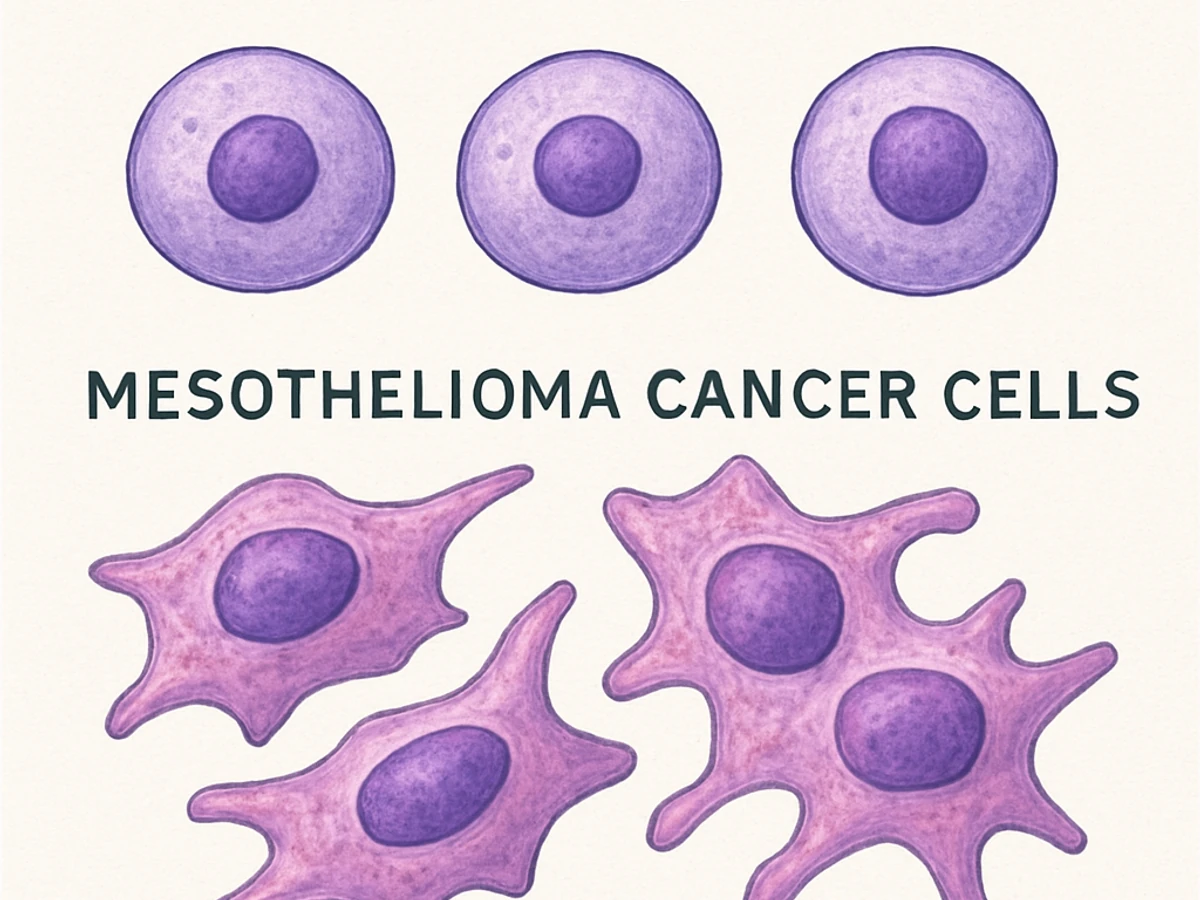
What Is Biphasic Mesothelioma?
Biphasic mesothelioma is defined by the presence of both epithelioid and sarcomatoid cells within the same tumor. The term "biphasic" literally means "two phases," referring to these two distinct cell populations.
Key characteristics include:
- Mixed cell populations: Both epithelioid and sarcomatoid cells present
- Variable ratios: The proportion of each cell type varies widely between patients
- Intermediate prognosis: Generally falls between epithelioid and sarcomatoid
- Diagnostic challenges: Requires adequate tissue sampling to identify both components
Why Cell Ratio Matters
The ratio of epithelioid to sarcomatoid cells is the most important factor determining prognosis in biphasic mesothelioma:
| Cell Ratio | Classification | Prognosis |
|---|---|---|
| >90% epithelioid | Epithelioid-dominant | Similar to pure epithelioid |
| 50-90% epithelioid | True biphasic | Intermediate |
| 10-50% epithelioid | Sarcomatoid-dominant | Approaches sarcomatoid |
| <10% epithelioid | Sarcomatoid | Similar to pure sarcomatoid |
Generally, the more epithelioid cells present, the better the prognosis.
Diagnosis of Biphasic Mesothelioma
The Challenge of Sampling
Diagnosing biphasic mesothelioma is challenging because:
- Tumor heterogeneity: Different areas may contain different cell types
- Small samples may miss: One cell type, leading to misclassification
- Needle biopsies: Often inadequate for identifying both components
- Surgical biopsies: Provide larger samples for accurate diagnosis
This is why second opinions from experienced pathologists are particularly important for suspected biphasic cases.
Immunohistochemistry
Pathologists use special staining to identify both cell types. Our comprehensive immunohistochemistry guide explains how these markers help distinguish biphasic mesothelioma:
- Epithelioid areas: Positive for cytokeratin, calretinin, WT-1
- Sarcomatoid areas: May be positive for vimentin, desmin (variable)
- Both areas: Usually positive for cytokeratin (mesothelioma marker)
Important: If you have a biphasic diagnosis based on a small biopsy, consider asking your doctor about obtaining a larger tissue sample to ensure accurate classification. This matters for prognosis and treatment planning.
Prognosis and Survival Rates
Biphasic mesothelioma generally has an intermediate prognosis between epithelioid and sarcomatoid types.
Survival Statistics
- Median survival: Approximately 12-15 months
- 1-year survival rate: 50-60%
- 3-year survival rate: 10-15%
- 5-year survival rate: 5-8%
However, these numbers vary significantly based on the epithelioid-to-sarcomatoid ratio. Epithelioid-dominant biphasic tumors may approach the survival rates of pure epithelioid mesothelioma.
Factors Affecting Prognosis
- Cell ratio: Most important factor
- Stage at diagnosis: Earlier stage improves outcomes
- Age and overall health: Younger, healthier patients fare better
- Treatment received: Multimodal therapy improves survival
- Gender: Women often have better outcomes
Treatment Options
Treatment for biphasic mesothelioma follows similar protocols to other cell types, with adjustments based on the dominant cell population and patient factors.
Surgery
Surgical options depend on stage, overall health, and cell predominance:
- Epithelioid-dominant: More likely to be surgical candidates
- Sarcomatoid-dominant: Less likely to benefit from surgery
- Procedures: Pleurectomy/decortication or extrapleural pneumonectomy
- Consideration: Intraoperative assessment of resectability
Chemotherapy
Standard chemotherapy for biphasic mesothelioma:
- First-line: Pemetrexed + platinum agent (cisplatin or carboplatin)
- Response rates: Intermediate between epithelioid and sarcomatoid
- Neoadjuvant/adjuvant: May be used before or after surgery
Immunotherapy
Increasingly important in biphasic mesothelioma treatment:
- Checkpoint inhibitors: Nivolumab, pembrolizumab
- Combination therapy: Nivolumab + ipilimumab showing promise
- Clinical trials: May offer additional options
Radiation Therapy
Used in various settings:
- Adjuvant therapy after surgery
- Palliative treatment for symptom control
- Prevention of surgical scar recurrence
Molecular and Genetic Factors
Research into biphasic mesothelioma has revealed:
- BAP1 mutations: Common in all mesothelioma types, including biphasic
- Genomic profiling and tumor markers: May help guide targeted therapy selection and predict treatment response
- Epithelial-mesenchymal transition (EMT): Process by which epithelioid cells may transform to sarcomatoid
Understanding these molecular characteristics may lead to more personalized treatment approaches. A multidisciplinary tumor board review can help determine the best strategy based on your specific molecular findings.
Clinical Trials
Given the intermediate prognosis of biphasic mesothelioma, clinical trials may be particularly valuable:
- Immunotherapy combinations
- Novel chemotherapy agents
- Targeted therapies based on molecular profiling
- Multimodal treatment protocols
Living with Biphasic Mesothelioma
The Uncertainty Factor
Having a "middle" prognosis can create unique emotional challenges:
- Not the "best case" (epithelioid) but not the "worst case" (sarcomatoid)
- Uncertainty about which way the disease will behave
- Need for careful monitoring to detect changes in tumor behavior
Support Resources
- Connect with others: Support groups for biphasic patients
- Professional counseling: To navigate uncertainty
- Palliative care: Early integration for symptom management
- Regular follow-up: Close monitoring for treatment response
Key Takeaways
- Biphasic mesothelioma contains both epithelioid and sarcomatoid cells
- Prognosis depends heavily on the ratio of cell types
- Accurate diagnosis may require larger tissue samples
- Treatment follows protocols similar to other mesothelioma types
- Clinical trials may offer the best hope for improved outcomes