Optimistic Outlook
Stage 1 mesothelioma, while serious, offers genuine hope. Early detection is a gift—it means more treatment options, stronger candidates for surgery, and the ability to pursue multimodal therapy with the goal of long-term remission or even cure.
What Is Stage 1 Mesothelioma?
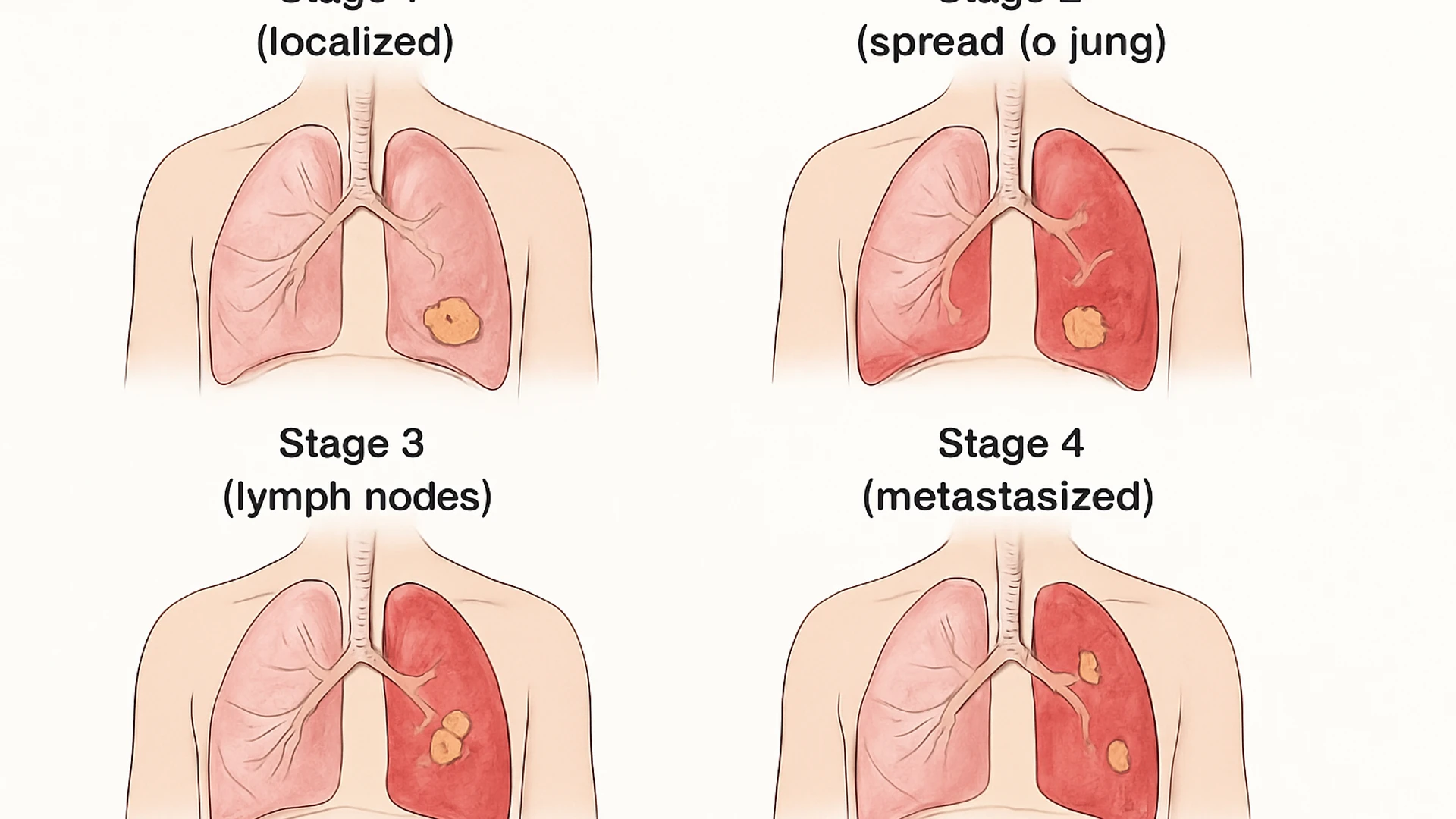
Stage 1 mesothelioma is the earliest stage of the disease, characterized by localized cancer limited to the pleural lining (for pleural mesothelioma) or peritoneal lining (for peritoneal mesothelioma). The cancer has not yet spread to distant sites, making it the most treatable stage.
TNM Classification for Stage 1
Stage 1 is further divided into substages 1A and 1B under the TNM system:
- Stage 1A (T1a, N0, M0): Tumor limited to visceral pleura only; no lymph node involvement
- Stage 1B (T1b, N0, M0): Tumor extends to parietal pleura or chest wall; still no lymph node involvement
The key distinguishing factor at stage 1 is the absence of distant metastasis (M0) and lymph node involvement (N0).
Stage 1 Survival Rates & Prognosis
Stage 1 offers the most favorable prognosis among all mesothelioma stages:
| Survival Metric | Rate |
|---|---|
| Median overall survival | 21+ months |
| 2-year survival | 40-46% |
| 5-year survival | 10-15% (with multimodal therapy) |
| Epithelioid cell type (better) | Up to 30+ months median |
| Sarcomatoid cell type (worse) | 12-18 months median |
Important: These statistics represent averages. Individual outcomes vary significantly based on treatment quality, patient health, and treatment response. Some stage 1 patients have achieved remarkable long-term survival (5+ years) with aggressive multimodal therapy.
Why Stage 1 Offers the Best Prognosis
Several factors make stage 1 mesothelioma more treatable than advanced stages:
Surgical Candidacy
Most stage 1 patients are candidates for aggressive surgical resection because the disease remains localized. This is critical because surgery is the cornerstone of curative-intent mesothelioma treatment.
Multimodal Therapy Feasibility
Stage 1 patients' overall health is typically better, allowing them to tolerate the intensity of multimodal therapy. Younger, healthier patients have the best outcomes.
No Distant Metastasis
With cancer limited to the pleura or peritoneum, treatment can focus on complete tumor removal rather than managing spread to distant organs.
Stage 1 Mesothelioma Treatment Options
Treatment for stage 1 typically follows a multimodal approach combining surgery, chemotherapy, and radiation for the best outcomes.
Surgical Options
Surgery is the primary treatment for stage 1 mesothelioma:
- Extrapleural pneumonectomy (EPP): Removal of the affected lung, pleura, diaphragm, and pericardium. Most aggressive option with highest response rates.
- Pleurectomy with decortication (P/D): Removal of pleura and visceral lining while preserving the lung. Preserves pulmonary function for some patients.
- Cytoreductive surgery: For peritoneal mesothelioma, removal of peritoneum and affected organs followed by heated chemotherapy (HIPEC).
Learn more about EPP vs. pleurectomy comparison →
Adjuvant Chemotherapy
Following surgery, chemotherapy eliminates remaining microscopic disease:
- Standard regimen: Pemetrexed (Alimta) + cisplatin or carboplatin
- Typical duration: 4-6 cycles over 3-4 months
- Response rate: 60-70% of patients respond to chemotherapy
- Goal: Complete response and sustained remission
Radiation Therapy
High-dose radiation targets remaining tumor cells:
- Intensity-modulated radiation therapy (IMRT): Delivers precise doses to tumor sites
- Hemithoracic radiation: Targets the entire chest cavity
- Typical dosage: 30-54 Gy in multiple fractions
- Goal: Local control and disease prevention
Clinical Trials
Stage 1 patients should ask about clinical trials for:
- Newer chemotherapy combinations
- Immunotherapy adjuvant therapies
- Targeted molecular therapies
- Gene therapy approaches
Find mesothelioma clinical trials near you →
What to Expect During Treatment
Surgery Recovery
After EPP or P/D surgery, expect:
- Hospital stay of 7-10 days
- Full recovery timeline of 6-8 weeks
- Chest tube removal typically within 2 weeks
- Return to normal activities gradually over 2-3 months
- Breathing changes (normal after lung removal or decortication)
Chemotherapy Side Effects
- Nausea and loss of appetite
- Fatigue and weakness
- Hair loss (temporary)
- Increased infection risk
- Blood cell count changes
Radiation Side Effects
- Chest wall fatigue and pain
- Esophageal irritation and difficulty swallowing
- Lung inflammation (radiation pneumonitis)
- Skin reactions at radiation sites
Long-Term Follow-Up and Surveillance
After completing multimodal therapy, close surveillance is essential:
- Imaging: CT or PET scans every 3 months initially, then every 6-12 months
- Tumor markers: Monitoring of mesothelioma markers in blood
- Specialist visits: Regular follow-up with your oncologist and surgeon
- Pulmonary function: Assessment of lung function if EPP was performed
- Symptom monitoring: Report new symptoms immediately
Maximizing Your Stage 1 Outcome
- Seek a mesothelioma specialist: Centers with high case volumes achieve better outcomes
- Complete multimodal therapy: Don't skip radiation or chemotherapy—all three components improve survival
- Maintain health: Nutrition, exercise, and stress management support recovery
- Stay compliant: Follow treatment schedules and medical advice precisely
- Consider clinical trials: Newer treatments may offer additional benefit
Legal Compensation
Even with an optimistic prognosis, stage 1 patients have strong legal cases:
- Medical expenses: Surgery, chemotherapy, radiation, and surveillance costs are substantial
- Lost wages: Treatment may require time off work
- Pain and suffering: Significant damages available
- Expedited resolution: Courts prioritize mesothelioma cases
Explore your legal rights and compensation →
Why Specialist Centers Matter
Stage 1 mesothelioma is treatable, but expertise matters enormously. Mesothelioma specialists have experience with complex EPP and P/D surgeries, optimal chemotherapy timing, and radiation planning. Patients treated at specialized centers have significantly better survival outcomes.