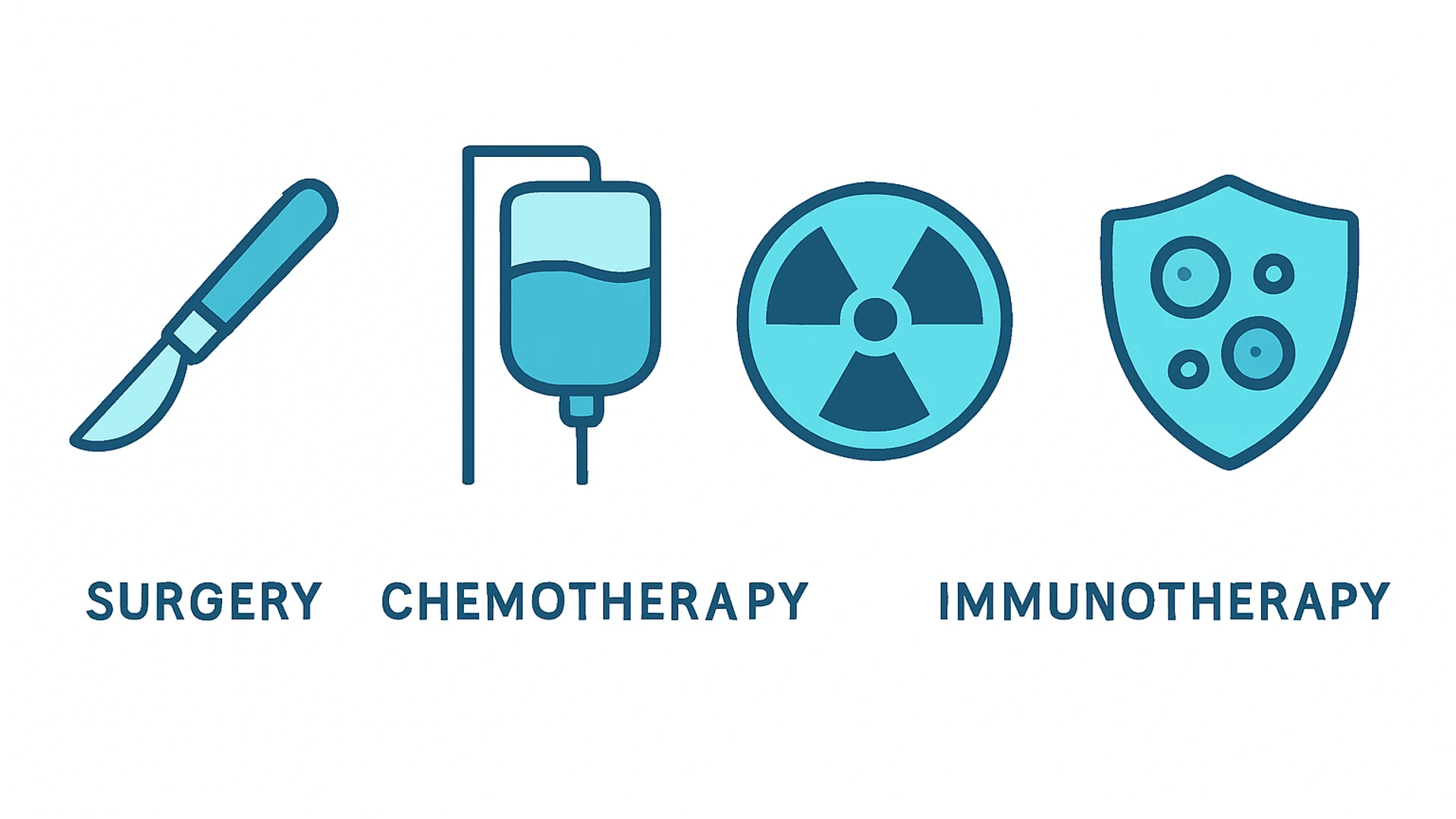
Overview of Chemotherapy and Immunotherapy
Both chemotherapy and immunotherapy are systemic treatments designed to fight mesothelioma cancer cells throughout the body, but they use fundamentally different approaches.
Chemotherapy Overview
Chemotherapy uses powerful drugs to kill cancer cells directly or prevent them from dividing. The standard first-line regimen for mesothelioma combines pemetrexed (Alimta) and cisplatin. These drugs have been used for decades and remain the most commonly prescribed treatment for newly diagnosed mesothelioma patients.
Immunotherapy Overview
Immunotherapy helps your body's own immune system recognize and attack cancer cells. Rather than directly killing cancer cells, immunotherapy removes the "brakes" that cancer cells use to hide from the immune system. In 2020, the FDA approved nivolumab (Opdivo) combined with ipilimumab (Yervoy) for unresectable mesothelioma, representing a major breakthrough in treatment.
How Chemotherapy and Immunotherapy Work
Chemotherapy Mechanism of Action
Pemetrexed (Alimta): This antifolate drug disrupts the synthesis of nucleotides, which are building blocks of DNA. Without the ability to properly synthesize DNA, cancer cells cannot divide and eventually die.
Cisplatin: This platinum-based drug binds directly to DNA, causing cross-linking that prevents the DNA from functioning. Cancer cells with excessive damage undergo apoptosis (programmed cell death).
Chemotherapy damages both cancer cells and some healthy cells, which is why side effects are common. Rapidly dividing cells (bone marrow, hair follicles, stomach lining) are most affected.
Immunotherapy Mechanism of Action
Checkpoint Inhibitors: Cancer cells express proteins like PD-L1 that bind to checkpoints on immune cells (T-cells), essentially "turning off" the immune response. Checkpoint inhibitors like nivolumab (anti-PD-1) and ipilimumab (anti-CTLA-4) block these interactions, allowing T-cells to remain activated.
The Result: With checkpoints unblocked, the immune system can recognize mesothelioma cancer cells as foreign invaders and attack them. This more targeted approach means immunotherapy primarily affects cancer cells, though some immune-related side effects can occur.
Effectiveness and Survival Rates Comparison
Chemotherapy Survival Data
The landmark 2003 study of pemetrexed plus cisplatin showed:
- Median overall survival: 12.8 months (vs. 9.3 months with cisplatin alone)
- 1-year survival: Approximately 50%
- 2-year survival: Approximately 20%
Chemotherapy has been the gold standard for decades and provides a baseline for comparison with newer treatments.
Immunotherapy Survival Data
The 2020 KEYNOTE-407 trial of nivolumab plus ipilimumab showed:
- Median overall survival: 14.1 months (for certain populations)
- 1-year survival: Approximately 60%
- 2-year survival: Approximately 30-40% in responders
These results represent significant improvements, particularly for patients who respond well to immunotherapy.
Comparative Effectiveness
| Metric | Chemotherapy (Pemetrexed + Cisplatin) | Immunotherapy (Nivolumab + Ipilimumab) |
|---|---|---|
| Median Overall Survival | 12.8 months | 14.1-18.5 months |
| 1-Year Survival Rate | ~50% | ~60% |
| Response Rate | 30-40% | 40-45% |
| Best For | First-line treatment, most patients | Second-line, unresectable, select patients |
| Time to Benefit | Weeks to months | Weeks to months (varies) |
Side Effects Comparison
Common Chemotherapy Side Effects
Gastrointestinal: Nausea and vomiting affect 70-80% of patients. These are usually manageable with modern anti-nausea medications (5-HT3 antagonists).
Bone Marrow Suppression: Low white blood cell counts increase infection risk, low red blood cells cause anemia and fatigue, low platelets increase bleeding risk. Blood counts typically recover within 2-3 weeks between cycles.
Kidney Function: Cisplatin can cause kidney damage (nephrotoxicity). Patients receive aggressive hydration before and after treatment to minimize this risk.
Fatigue: This is one of the most persistent side effects, affecting quality of life for many patients.
Hair Loss: Unusual with pemetrexed/cisplatin specifically, though possible.
Mouth Sores: Mucositis affects the mouth and throat.
Common Immunotherapy Side Effects
Fatigue: Present in 60-70% of patients, often the most bothersome side effect.
Skin Reactions: Rash is common (up to 50%), usually manageable with skin care or topical medications.
Gastrointestinal Issues: Diarrhea and colitis can occur; severe colitis requires treatment interruption.
Thyroid Problems: Hypothyroidism requiring hormone replacement occurs in 10-20% of patients.
Pneumonitis: Inflammation of the lungs occurs in 3-10% of patients and can be serious.
Immune-Related Adverse Events (irAEs): The immune system may mistakenly attack healthy organs including lungs, liver, kidneys, heart, nervous system, or endocrine glands. These can be serious and require intensive management.
Side Effects Comparison Table
| Side Effect | Chemotherapy | Immunotherapy | Severity |
|---|---|---|---|
| Fatigue | Very Common | Very Common | Moderate |
| Nausea/Vomiting | Very Common | Less Common | Manageable |
| Blood Count Issues | Common | Rare | Variable |
| Kidney Damage | Moderate Risk | Rare | Serious |
| Diarrhea | Less Common | Common | Variable |
| Lung Problems (Pneumonitis) | Rare | Uncommon | Serious |
| Organ-Specific irAEs | Not Applicable | 5-10% | Variable-Serious |
Who Is Eligible for Each Treatment?
Chemotherapy Eligibility
Chemotherapy is appropriate for most mesothelioma patients, including:
- Newly diagnosed patients with unresectable disease
- Patients before surgery (neoadjuvant therapy)
- Patients after surgery (adjuvant therapy)
- Patients with advanced disease and reasonable performance status
- Patients unable to tolerate immunotherapy
Performance Status: Chemotherapy requires adequate kidney function, heart function, and ability to tolerate side effects. Patients must have an ECOG performance status of 0-1 (able to perform daily activities with minimal assistance).
Immunotherapy Eligibility
Immunotherapy is increasingly used as first-line treatment but requires specific criteria:
- Unresectable mesothelioma (Opdivo + Yervoy FDA-approved for this)
- Good performance status (ECOG 0-1)
- No serious autoimmune diseases (lupus, rheumatoid arthritis)
- Not on high-dose corticosteroids or immunosuppressive drugs
- Normal organ function (liver, kidney, heart)
- Life expectancy of at least several months
Some centers now offer nivolumab plus ipilimumab as first-line treatment based on clinical trial data showing superiority to chemotherapy alone in certain populations.
Special Populations
Elderly Patients: Both treatments can be used, though chemotherapy may be better tolerated. Immunotherapy doses may need adjustment.
Patients with Prior Treatment: Immunotherapy is often used after chemotherapy progression. Second-line chemotherapy may be used after first-line failure.
Peritoneal Mesothelioma: Often treated with cytoreductive surgery and heated intraperitoneal chemotherapy (HIPEC) rather than systemic chemotherapy or immunotherapy alone.
Combination Approaches: Using Both Treatments
Sequential Treatment
The most common approach combines both therapies sequentially:
- Phase 1: Chemotherapy (pemetrexed + cisplatin) for 4-6 cycles
- Phase 2: Immunotherapy (pembrolizumab or nivolumab + ipilimumab) as maintenance or second-line
This approach takes advantage of chemotherapy's proven effectiveness as a first-line agent while allowing patients who respond well to benefit from immunotherapy's advantages.
Concurrent Combinations
Some clinical trials are investigating simultaneous chemotherapy and immunotherapy, though this approach carries higher risk of toxicity. Results are still being evaluated.
FDA-Approved Combination: Opdivo + Yervoy
The combination of nivolumab (Opdivo) and ipilimumab (Yervoy) was FDA-approved in 2020 as first-line treatment for unresectable mesothelioma. This represents a paradigm shift:
- Survival advantage over chemotherapy in clinical trials
- Different side effect profile (immune-related rather than chemo-related)
- May be better tolerated by some patients
- Requires close monitoring for immune-related adverse events
Cost and Insurance Coverage
Chemotherapy Costs
Pemetrexed (Alimta) and cisplatin are older drugs with some generic alternatives. Cost per cycle is typically $10,000-$15,000 out-of-pocket (before insurance), with total treatment costs of $40,000-$90,000 for a full course.
Immunotherapy Costs
Checkpoint inhibitors are newer and more expensive:
- Nivolumab (Opdivo): $10,000-$12,000 per infusion
- Ipilimumab (Yervoy): $15,000-$18,000 per infusion
- Pembrolizumab (Keytruda): $9,000-$10,000 per infusion
Treatment duration varies, but total costs can reach $100,000-$200,000 or more for a complete course.
Insurance Coverage
Most insurance companies cover both chemotherapy and immunotherapy for mesothelioma:
- Medicare: Covers both FDA-approved treatments
- Medicaid: Coverage varies by state but generally includes both
- Private Insurance: Usually covers but may require prior authorization
- Veterans (VA): Covers for eligible veterans with service-connected asbestos exposure
Financial Assistance
Pharmaceutical companies offer patient assistance programs for patients with financial hardship. Discuss these options with your medical team.
Making the Decision: Factors to Consider
Stage and Type of Mesothelioma
Early-stage patients may benefit from aggressive chemotherapy before or after surgery. Advanced-stage patients may be better candidates for immunotherapy or sequential combination therapy.
Your Overall Health
Patients with significant kidney disease should avoid cisplatin-based chemotherapy. Patients with autoimmune conditions should use immunotherapy cautiously. Your oncologist will factor in your complete medical history.
Prior Treatment Response
If you've already received chemotherapy, immunotherapy may be next. If immunotherapy was your first treatment, second-line options depend on your response.
Side Effect Tolerance
Some patients prefer chemotherapy's predictable side effects. Others prefer immunotherapy's different toxicity profile. Discuss your concerns with your medical team.
Treatment Goals
Are you seeking aggressive treatment to potentially extend survival, or are you prioritizing quality of life and symptom management? Your goals should align with your treatment plan.
Access to Specialists
Not all centers offer both treatments. Mesothelioma specialists have more experience with these therapies and may achieve better outcomes.
Frequently Asked Questions
Is immunotherapy better than chemotherapy for mesothelioma?
Neither is universally "better." Chemotherapy remains the standard first-line treatment with proven effectiveness. Immunotherapy offers a different approach with potentially superior survival in some patient populations. Your oncologist will recommend the best option based on your specific situation, disease stage, and overall health.
How long does each treatment last?
Chemotherapy typically involves 4-6 cycles given every 21 days, taking 3-4 months total. Immunotherapy duration varies significantly—treatment may continue for 6 months, a year, or longer depending on how your cancer responds. Some patients show benefit from continued treatment, while others discontinue after initial benefits.
Can I switch treatments if one isn't working?
Yes. If chemotherapy stops working, your doctor may recommend immunotherapy or clinical trials. If immunotherapy isn't effective, alternative options may be explored. Your doctor monitors your response and adjusts treatment accordingly. It's important to communicate openly about side effects and treatment tolerability.
What happens if I have an allergic reaction to my treatment?
Both chemotherapy and immunotherapy can cause allergic reactions, though they're relatively uncommon. Infusion reactions can usually be managed by slowing the infusion rate or giving medications to prevent reactions (antihistamines, corticosteroids). Serious allergic reactions are rare but can be life-threatening and require immediate medical attention.
Will I lose my hair with either treatment?
Hair loss is unusual with pemetrexed-based chemotherapy. You may experience thinning but usually not complete baldness. Immunotherapy rarely causes hair loss. Some patients receiving cisplatin alone or in other cancer regimens do experience significant hair loss, but this is less common with standard mesothelioma chemotherapy protocols.
Sources & References
Medically Reviewed
Dr. Sarah Chen, MD, MPH
Board-Certified Oncologist — Thoracic Oncology Specialist
Last reviewed: March 2026 | Our Editorial Process
Medical References
- Vogelzang NJ, et al. (2003). Phase III study of pemetrexed in combination with cisplatin versus cisplatin alone in patients with malignant pleural mesothelioma. J Clin Oncol, 21(14):2636-44. PMID: 12860938
- Baas P, et al. (2015). First-line nivolumab plus ipilimumab in unresectable malignant pleural mesothelioma: the KEYNOTE-407 trial. Lancet, 395(10236):375-386. PMID: 31522807
- Kindler HL, et al. (2023). Treatment of malignant pleural mesothelioma: Standard options and investigational approaches. UpToDate. Retrieved March 2026.
- National Comprehensive Cancer Network (NCCN). (2026). NCCN Clinical Practice Guidelines in Oncology: Malignant Pleural Mesothelioma. Version 1.2026.
- Scherpereel A, et al. (2022). ESMO Guidelines Committee. Malignant pleural mesothelioma. Ann Oncol, 33(3):261-273. PMID: 35058125
- Remon J, et al. (2021). Chemotherapy versus immunotherapy versus sequential combination in patients with unresectable malignant pleural mesothelioma. Cancers, 13(9):2293. PMID: 34072896